HanweiSmart Gas

Search Hanwei Smart Gas

Products, solutions and technical guides

Hanwei Smart Gas

Home / Commercial Kitchen Gas Safety Solution

Commercial Kitchen Gas Safety Solution

Connect kitchen gas leak detection with local warning, optional shut-off and accountable follow-up across individual sites or commercial facilities.

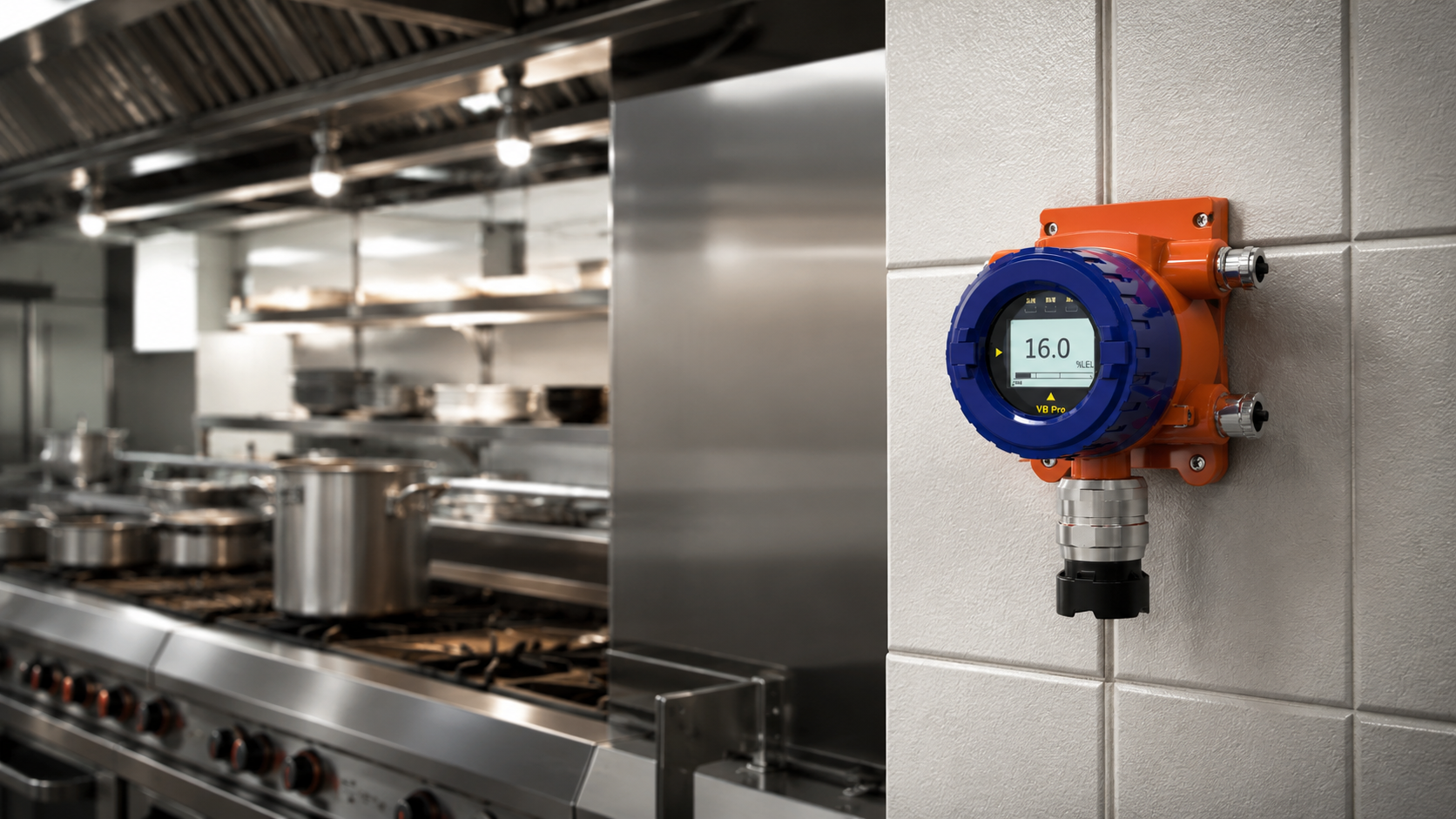
Commercial Kitchen Gas Safety Solution business scene visual

Answer Summary

Hanwei Smart Gas brings together gas detectors, gas detection controllers, audible-visual alarms and optional valve linkage for restaurants, hotels, shopping malls and catering kitchens. Facility owners, gas utilities and local integrators can plan a local alarm arrangement, a controller-based system for multiple monitoring points, or remote records where supervision across sites is needed. The purpose is to connect a leak indication with a recognizable location, responsible site personnel and documented follow-up, rather than leave an alarm without an agreed response. Product model, target gas, linkage compatibility, platform scope and certification status require product model and target market confirmation.

Find the Right Kitchen Alarm Arrangement

A restaurant manager needs a local warning. A hotel engineer may need to identify several alarm points. A multi-site operator also needs follow-up records. Start with who must act, then choose the equipment scope.

  1. 01

    Kitchen risk point

    Detector monitors surrounding gas at an assessed location.

  2. 02

    Local warning

    Standalone alarm or compatible controller-based handling.

  3. 03

    Site response

    Responsible staff follow site procedures; valve linkage is optional.

  4. 04

    Follow-up

    Retain the location, action and maintenance outcome where records are included.

Functional sequence, not a wiring diagram. Detector placement and any valve action require site design and model compatibility review.

One kitchen, local response

Staff need an on-site leak warning without a remote supervision requirement.

Configuration to review

Review GTY-CXL as a standalone detection option.

Practical value

Keeps the equipment scope focused on local warning instead of requiring a platform for every site.

Check before selection

Gas suitability, mounting, alarm visibility and who responds. External linkage is not assumed.

Several points, one facility team

Hotel or mall staff need to identify the affected kitchen or monitoring point.

Configuration to review

Compatible detectors with KB180 or KB500; local audible-visual warning as specified.

Practical value

Brings detector inputs and local alarm handling into a coordinated arrangement.

Check before selection

KB180 uses 4-20mA detector inputs. KB500 has a PBUS arrangement. Match the exact detector output; they are not interchangeable choices based only on point count.

Several sites, shared oversight

Managers need to review site events and whether maintenance followed.

Configuration to review

An agreed reporting connection and platform records alongside local alarms.

Practical value

Connects site identity with event history and follow-up, without replacing local response.

Check before selection

Data interfaces, network availability, event fields, operating roles and optional shut-off scope.

Plan the Local Delivery Scope

Share the country, gas type, kitchen layout, existing detector/controller models and required valve action. Agree who installs, commissions and maintains the system, plus the language, certification documents and spare parts required.

Customer Challenges

In a restaurant, an alarm must reach the people responsible for the kitchen. In a hotel or shopping mall, the facility team also needs to identify which kitchen or monitoring point needs attention. Where several sites are managed together, separate local alarms can leave managers without a consistent view of what happened and whether follow-up was completed.

Hanwei Solution

Hanwei combines detection, alarm control and local warning around the site's operating responsibilities. A standalone arrangement can serve a local alarm need; compatible detectors and a controller can bring multiple points into a coordinated alarm workflow. Optional shut-off linkage and remote records are scoped separately. The design connects each monitoring point to an identified location, an agreed response and maintenance follow-up, so the discussion covers how the system will be operated as well as which devices to buy.

Deployment Scenario

The solution is organized around operating scenarios first, then product selection and platform workflow.

Application Scenarios

Restaurants
Hotels
Shopping malls
Catering kitchens
Commercial facilities

System Components

Select detection, alarm and response components for the kitchen layout and operating needs. Standalone detection and controller-based configurations are options to review, not a fixed equipment package.

Gas Detection & Alarm Control

  • Commercial Gas Detector

    Fixed gas leak monitoring for commercial kitchens; select the detector and installation position for the target gas and site conditions.

  • GTY-CXL Standalone Combustible Gas Detector

    A standalone detection option where this configuration suits the site. Confirm any required external linkage by model.

  • Gas Detection Controller

    Receives detector signals and supports local alarm handling within the confirmed system configuration.

  • KB180 / KB500 Gas Detection Controllers

    Model options within the controller category, not additional mandatory devices. Confirm detector compatibility and project scale before selection.

Local Warning & Optional Shut-off

  • RS166 Audible and Visual Alarm

    Provides local audible and visual warning as part of the selected alarm system; it is not a gas detector.

  • Electromagnetic Gas Emergency Shut-off Valve

    An optional linkage execution device. Confirm valve selection, controller output, installation and reset requirements for the project.

Monitoring & Response Records

  • Platform and response workflow

    Software functions for alarm records and maintenance follow-up where remote supervision is included in the project scope, not a separate detector.

Product & Certification NotesSpecifications and certification availability depend on the selected model and target market. Detector placement, controller compatibility and optional valve linkage should be confirmed for the site.

Where Kitchen Gas Safety Needs Differ

For restaurant operators, hotel and mall facility teams, gas utilities and installation partners, the practical question is who needs to receive an alarm and manage the follow-up.

Individual restaurants

The immediate need is a clear local warning linked to the kitchen's response procedure. A standalone detector or a controller-based arrangement can be reviewed against the site's monitoring points and linkage needs, without assuming a platform is required.

Hotels and catering kitchens

Several kitchen or gas-use points may fall under one facility team. A controller-based arrangement brings compatible detector signals together, helping staff identify the affected point and keep maintenance follow-up associated with it.

Shopping malls and commercial facilities

Kitchen operators and facility managers may have different responsibilities. Define monitoring locations, local warning and responsibility for follow-up together, so an event has an owner rather than remaining an isolated alarm indication.

Multi-site kitchen operations

Where remote supervision is part of the scope, connect site identity, alarm records and maintenance status for management review. Keep local alarm handling distinct from remote visibility; a dashboard does not replace an on-site response procedure.

Choose the Response Scope, Not Just a Detector

These are configuration paths to discuss, not mandatory equipment bundles. The distinction is how alarms are handled and who needs visibility.

Local alarm arrangement

Consider GTY-CXL where a standalone combustible gas detector suits the site. The focus is local leak indication and staff response. Any external reporting or linkage must be checked separately rather than assumed from the presence of an alarm.

Coordinated multi-point alarms

Combine suitable commercial gas detectors with a compatible KB180 or KB500 controller and local audible-visual warning where required. This adds a defined signal-handling and response structure for multiple points instead of treating each device as an unrelated purchase.

Optional shut-off linkage

Where the project calls for valve linkage, review the detector-controller-valve chain as a whole. The shut-off valve performs the selected action; it does not detect gas. Output compatibility, installation and reset responsibilities belong in the project design.

Remote records and follow-up

Add a monitoring platform only where site supervision and record review are required. Define which events, device states and maintenance outcomes will be recorded. Supported interfaces and workflow functions must be confirmed before they become delivery commitments.

System Architecture

A typical controller-based kitchen alarm workflow is shown below. Standalone detectors can provide local alarms without this full chain; valve linkage and remote records depend on the selected models and project design.

Gas Detection

  • Commercial gas detector
  • Placement near assessed leak risks
  • Target gas confirmed by model

Alarm Control

  • Compatible gas detection controller
  • KB180 / KB500 model selection
  • Detector signal handling

Local Warning

  • Audible and visual warning
  • RS166 where suitable
  • Site alarm procedures

Optional Shut-off

  • Electromagnetic shut-off valve
  • Confirmed controller output and wiring
  • Site-specific reset procedure

Response & Records

  • Site team follow-up
  • Maintenance and closure records
  • Remote records where included

Operational Value

How this solution supports day-to-day operations and project delivery.

Point-level clarity: connect an alarm to the kitchen or monitoring point that requires attention, rather than only showing that an alarm exists.
Joined-up component selection: discuss detectors, controller inputs, local warning and optional valve outputs together to expose compatibility questions before procurement.
A defined response owner: align kitchen staff, facility management and maintenance responsibilities with the selected alarm workflow.
Traceable follow-up: where records are included, retain the event, site action and maintenance outcome for review across one or several sites.

Discuss Your Kitchen Safety Scope

Share the target country, gas type, kitchen or facility layout, number of monitoring points and who handles local alarms. Include any existing detector or controller models, valve-linkage needs and remote supervision requirements. These inputs allow the equipment combination and response scope to be reviewed together.

FAQ

What does a commercial kitchen gas safety solution include?

A typical discussion includes gas detectors, alarm controllers, audible and visual alarm devices, optional shut-off valve linkage and response records. Final configuration depends on site conditions and product model.

Where can this solution be used?

It is suitable for restaurants, hotels, shopping malls, catering kitchens and commercial gas-using facilities after site and target-market review.

Can the system link with a shut-off valve?

Optional shut-off valve linkage can be discussed by detector, controller, valve model, installation condition and local project requirements.

When is a standalone detector different from a controller-based system?

A standalone detector serves local detection and alarm needs within its model capabilities. A controller-based arrangement handles compatible signals from the selected monitoring points and coordinates alarm outputs. Choose according to the site layout and response needs, not an assumption that every kitchen requires the same package.

Can several kitchen sites be reviewed together?

Remote alarm records and multi-site status can be included where the selected devices, communication and platform scope support them. Confirm the events to collect, site identities and follow-up responsibilities. Remote supervision does not replace local alarm handling.

Are certifications available?

Certification availability varies by product and target market. Contact us for confirmed specifications.

Contact / Inquiry Form

Share your product interest, target market and application scenario so our team can review your inquiry and contact you.

You can also contact [email protected]. For technical drawings or equipment photos, ask our team about a suitable transfer method. Share only material you are authorized to disclose and include your inquiry reference when available.