
Centralized gas alarm visibility across multiple detector points
Support practical gas safety operation with clearer visibility, records and response workflows.
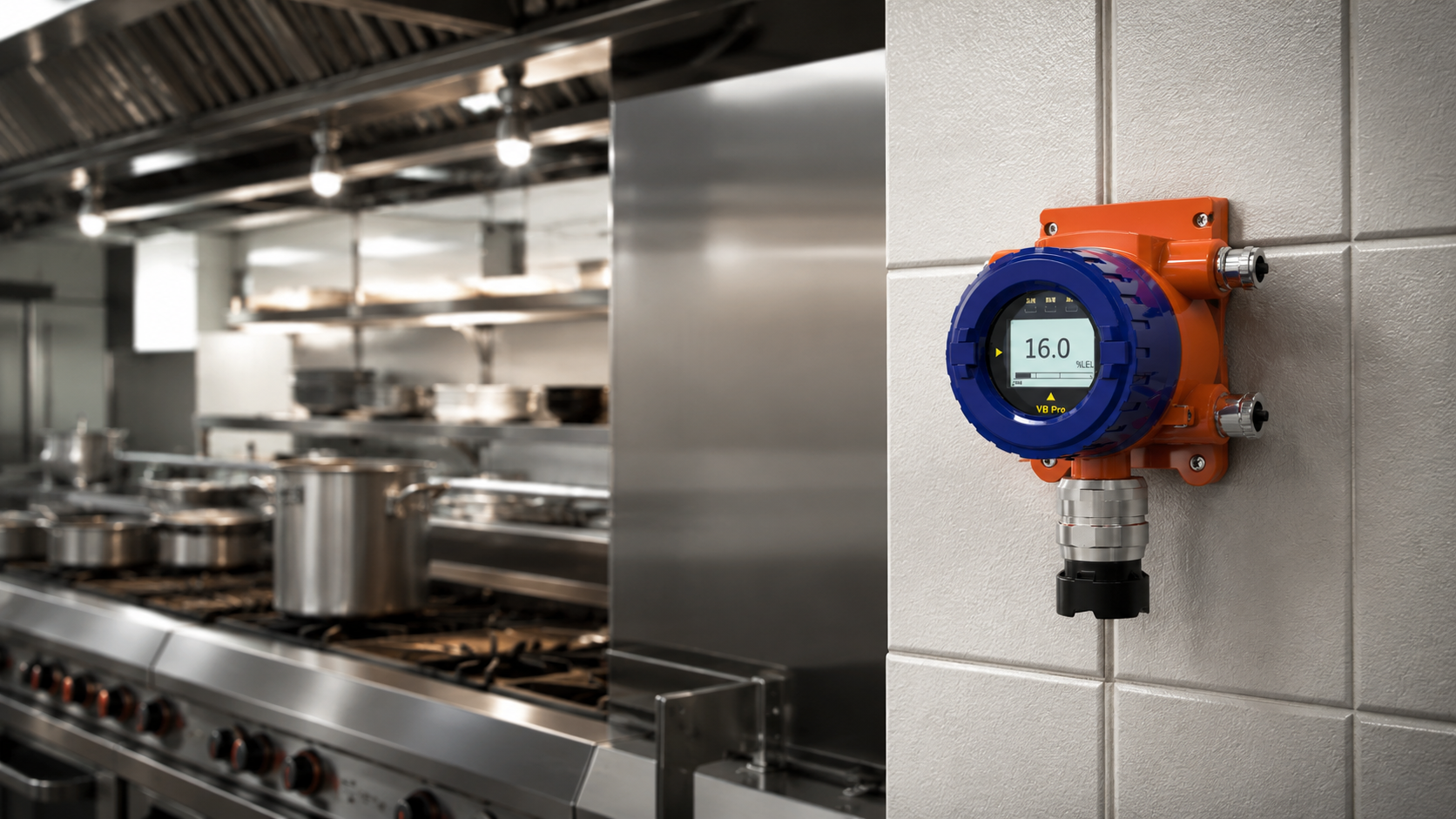
Application Scenario
Home / Applications / Small Commercial & Business Gas Safety Monitoring
Gas detector, controller, alarm linkage and monitoring-record application for small commercial premises, public commercial spaces and business gas-use environments.
Field Devices
Gas detectors, pressure points, odorization terminals and inspection devices.
Monitoring Map
Map-based visibility for sites, networks, alarms and device status.
Alarm Workflow
Classify alarms, route response tasks and keep event context connected.
Response Record
Keep patrol, verification and response evidence available for review.
Operational Needs
Hanwei frames application pages around the operating conditions, risk points and response workflows that matter to each customer type.
Support practical gas safety operation with clearer visibility, records and response workflows.
Support practical gas safety operation with clearer visibility, records and response workflows.
Support practical gas safety operation with clearer visibility, records and response workflows.
Support practical gas safety operation with clearer visibility, records and response workflows.
Application Details
Explore the operating conditions, monitoring tasks and response needs for each scenario, with product selection boundaries to review before deployment.
Scenario 1
Where it is usedSmall restaurants, food shops, service shops and other small business gas-use locations.
Customer problemIndependent local alarms may be difficult to supervise across multiple detector points or multiple small premises.
Hanwei Smart Gas approachUse compatible gas detectors with KB180 or KB500 gas detection controllers for centralized alarm handling, local warning and monitoring-record discussion.
Customer valueSupport clearer multi-point gas alarm visibility, controller-level event handling and more traceable operation records.
Safety boundaryKB180 and KB500 are controllers, not detectors. They should be installed in a safe indoor operation area and paired with confirmed detector models.
Scenario 2
Where it is usedShopping malls, catering areas, public business spaces, utility rooms and related commercial gas-use areas.
Customer problemGas safety teams may need detector input, alarm output and event records in one maintainable system rather than isolated devices.
Hanwei Smart Gas approachConnect gas detectors, KB180 or KB500 controller, audible and visual alarms and optional relay output according to confirmed site design.
Customer valueHelp facility and gas safety teams organize local warning, response follow-up and monitoring-system records.
Safety boundaryApplicable requirements and third-party platform compatibility must be reviewed for the target market and project scope.
Scenario 3
Where it is usedUtility rooms, underground corridors, service areas and monitored business facility spaces.
Customer problemEnclosed or semi-enclosed utility spaces can make local warning, linkage and remote review more important.
Hanwei Smart Gas approachUse detector-controller-alarm architecture with KB180 4-20mA input or KB500 bus / wireless input discussions where monitoring-system records are needed.
Customer valueSupport alarm records, maintenance follow-up and more structured gas safety supervision for facility operators.
Safety boundaryDetector placement, controller installation, linkage device selection and communication should be reviewed by site condition.
Scenario 4
Where it is usedProjects where several gas detector points need centralized alarm judgement and response linkage.
Customer problemDifferent detector points and linkage devices can become hard to manage if there is no controller-level workflow.
Hanwei Smart Gas approachDiscuss KB180 4-20mA input or KB500 bus / wireless controller input, relay output, local warning, upload interface and record review as a connected gas safety workflow.
Customer valueHelp define a phased monitoring scope, with detector compatibility, wireless coverage and certification status reviewed before selection.
Safety boundaryDetection gas type and performance depend on the connected detector model, not on the controller alone.
Recommended Solution Path
These solution paths show how Hanwei packages monitoring points, devices and platform records around the application scenario.
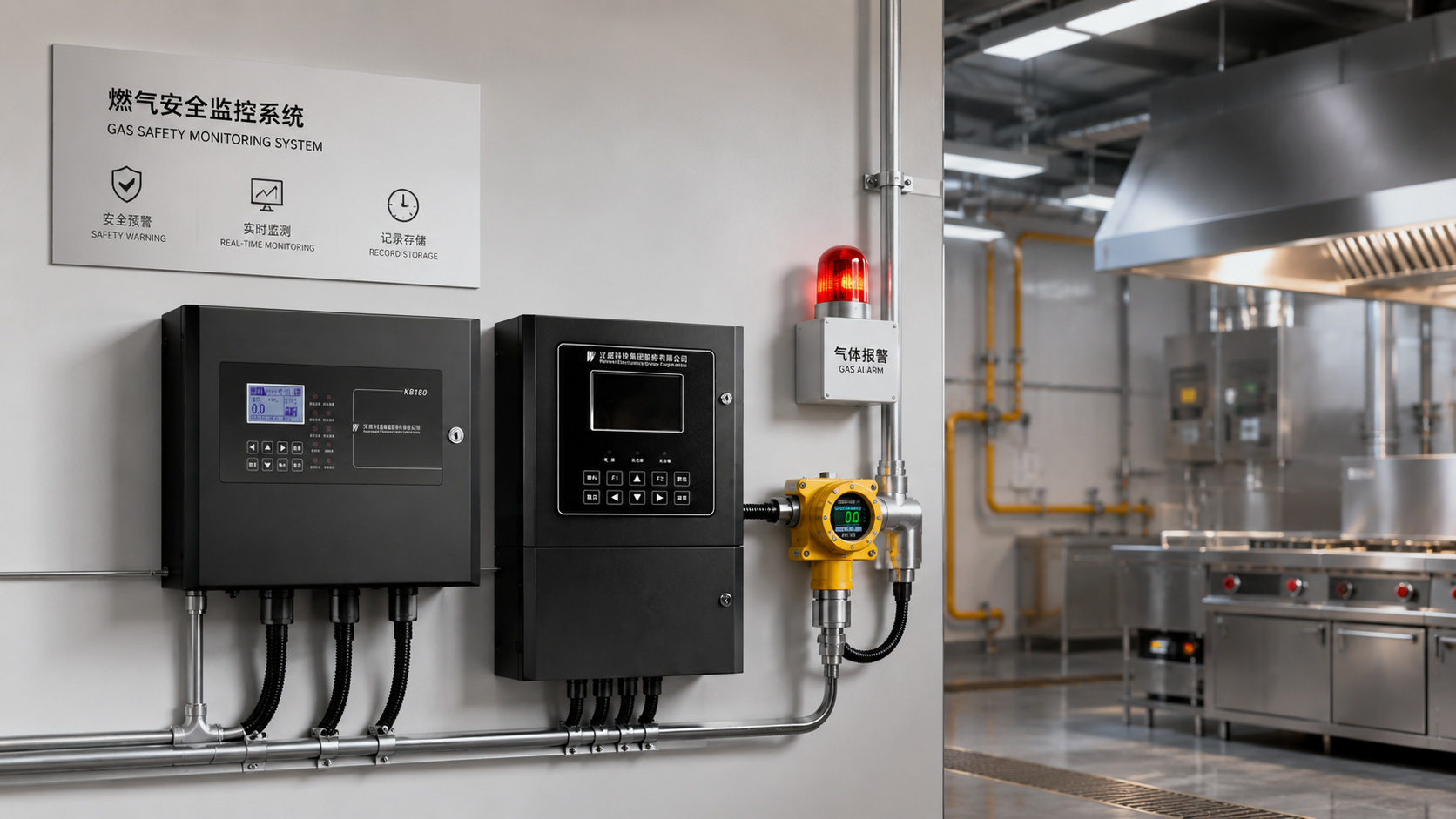 Solution
KB180-centered 4-20mA detector input, local alarm handling, relay linkage and RS485 / MODBUS upload workflow for compact commercial gas safety projects.
View SolutionSolutionKB500-centered detector input, alarm handling, relay linkage and monitoring-system upload workflow for small commercial, public-space and industrial gas safety projects.
View SolutionSolutionConnect kitchen gas leak detection with local warning, optional shut-off and accountable follow-up across individual sites or commercial facilities.
View Solution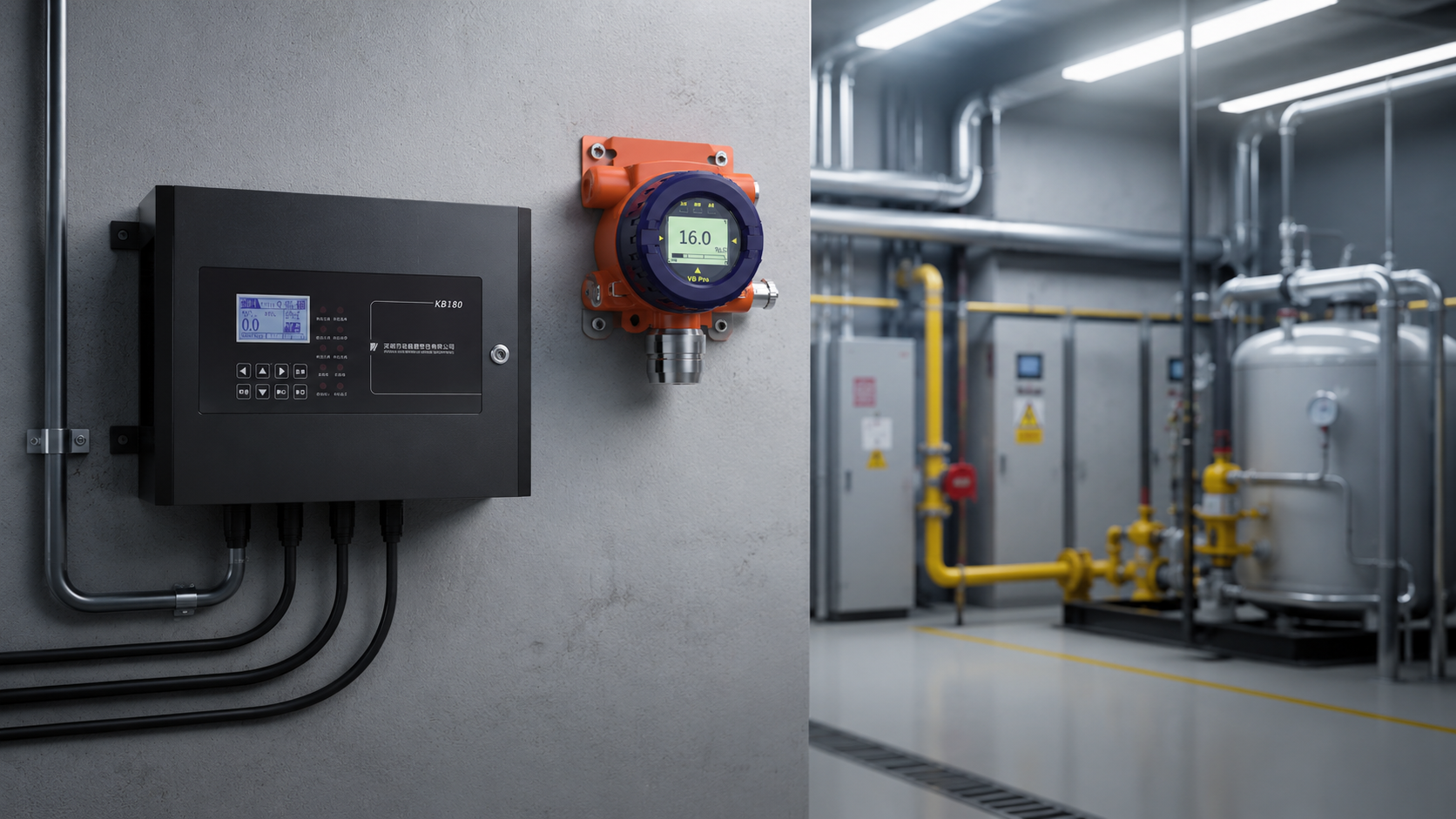 Platform
Gas IoT, alarm monitoring and operation platform structure for connected gas safety workflows.
View SolutionHow It Works
Hanwei is positioned as a gas safety operation partner, connecting devices, maps, alarms and records instead of presenting isolated equipment only.
Step 1
Gas detectors, pressure points, odorization terminals and inspection devices.
Step 2
Map-based visibility for sites, networks, alarms and device status.
Step 3
Classify alarms, route response tasks and keep event context connected.
Step 4
Keep patrol, verification and response evidence available for review.
Step 5
Support local delivery through pilot planning and technical discussion.
Next Step
Share your target sites, operating role and priority risks. Hanwei can help structure a focused application discussion, solution path or pilot proposal.
Application-led solution planning
Field devices, monitoring map, alarm workflow and partner support.