HanweiSmart Gas

Search Hanwei Smart Gas

Products, solutions and technical guides

Hanwei Smart Gas

Home / Industrial Gas Detection Solution

Industrial Gas Detection Solution

Link fixed gas monitoring, compatible alarm control and portable inspection to a defined response workflow at industrial plants and utility stations.

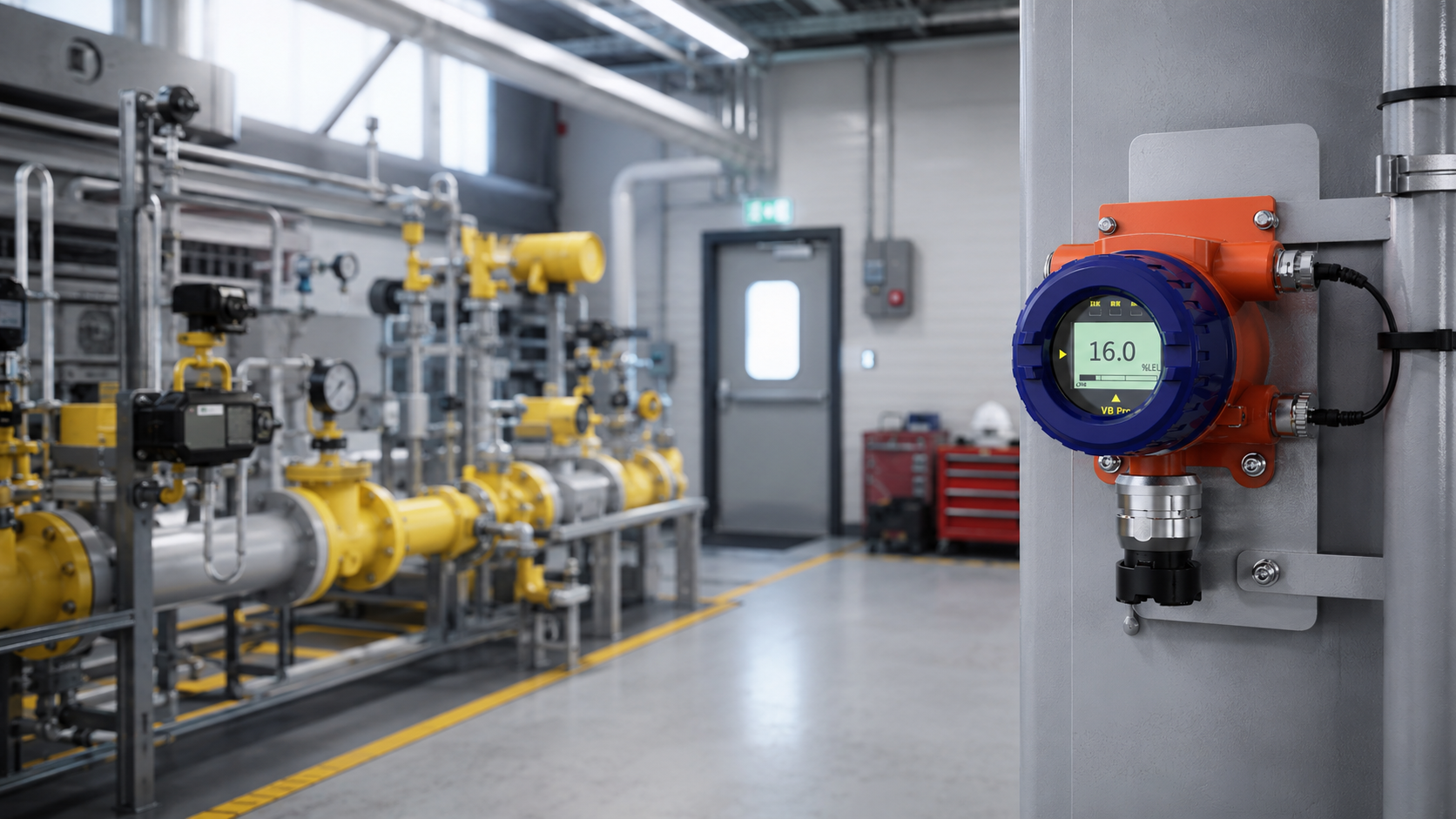
Industrial Gas Detection Solution business scene visual

Answer Summary

Hanwei Smart Gas supports industrial operators, gas utilities, engineering contractors and system integrators with fixed gas detection, compatible controllers, audible-visual warning and portable inspection options. Applications include plant gas-use areas, gas and regulating stations, equipment areas and selected storage or transfer risk points. The solution connects an installed monitoring point with local alarm handling, field follow-up and response records, with optional shut-off linkage or platform integration where specified. Detector type is selected for the target gas and environment; not every model supports every gas or interface. Product suitability, hazardous-area applicability, performance and certification require product model and target market confirmation.

Customer Challenges

Industrial sites contain different gases, equipment and operating areas, so one detector configuration cannot be assumed to fit every point. An alarm also needs location and device context before it becomes an actionable task. Fixed monitoring, portable inspection and maintenance records are often handled as separate activities; the project needs to connect their responsibilities and outputs.

Hanwei Solution

Hanwei combines model-specific fixed detectors, compatible alarm controllers and local warning with portable tools for field follow-up. The design distinguishes continuous monitoring at installed points from inspection tasks performed by trained site teams. Optional valve linkage and platform records are reviewed against the existing control environment. This creates a path from a detected condition to an assigned action and documented outcome, while keeping gas coverage and equipment suitability specific to each location.

Deployment Scenario

The solution is organized around operating scenarios first, then product selection and platform workflow.

Application Scenarios

Industrial plants
Gas stations
Utility facilities

System Components

Explore fixed detection, alarm control and portable inspection options for industrial sites. Select the detector type and system configuration for the target gas and installation conditions; the listed models are not a mandatory package.

Fixed Gas Detection

  • GTQ-BS Series Combustible Gas Detector

    Fixed combustible gas detection for selected industrial monitoring points; confirm target gas and installation suitability by model.

  • WD2200 Composite Gas Detector

    A configurable gas detection option. Confirm the gas and sensor configuration rather than assuming every model monitors the same gases.

  • WD6200IR Infrared Gas Detector

    An infrared option for fixed combustible gas monitoring, selected for the target gas and system integration requirements.

Alarm Control & Optional Shut-off

  • KB500 / KB180 Gas Detection Controllers

    Controller options for detector signals and alarm handling; select the model against detector compatibility and project requirements.

  • RS166 Audible and Visual Alarm

    Local warning equipment within the alarm workflow, separate from the gas-sensing devices.

  • Electromagnetic Gas Emergency Shut-off Valve

    A linkage execution option, subject to confirmed controller output, valve specification, installation and site response requirements.

Portable Inspection

  • Portable Gas Detector

    Supports field inspection and alarm verification. Select the target-gas configuration and operating conditions for the inspection task.

Product & Certification NotesSpecifications and certification availability depend on the selected model and target market. Confirm target gases, installation zones, detector-controller compatibility and any shut-off linkage before project use.

Industrial Monitoring by Operating Area

For plant operators, utility station teams and engineering partners, useful coverage starts with the role of each monitoring point and the team responsible for it.

Plant gas-use and equipment areas

Different processes and equipment can create different monitoring requirements. Select fixed detectors by target gas and site conditions, then associate each point with the local warning and response plan. A shared product family does not mean identical sensors at every location.

Gas and regulating stations

Station teams need to relate an indication to a specific equipment area or assessed risk point. Combine suitable fixed monitoring with compatible alarm control and local warning, then define how field follow-up and maintenance outcomes will be recorded.

Storage and transfer risk points

Potential leak points around selected valves, flanges or equipment require site assessment. Environmental gas detection supports awareness around those points; it is not an instrument inserted into the process pipeline and does not measure process composition.

Inspection and maintenance activities

Portable detectors support field inspection and alarm verification when configured for the task. Link the inspection location and findings back to the monitored asset. Portable readings are one part of the site's response procedure, not a substitute for it.

Build a Connected Site Response

The value lies in assigning complementary roles to field detection, alarm handling and follow-up. Device and interface choices remain specific to the project.

Match the detector to the monitoring task

Review GTQ-BS, WD2200 and WD6200IR as different detector options, not a bundle required at every point. The selected sensor, gas coverage and output should match the location. An infrared or composite label alone does not establish suitability for every gas.

Coordinate local alarms and optional linkage

Pair compatible detectors with the selected controller and audible-visual alarm equipment. Where shut-off is needed, include the output and valve interface in the design review. Keep gas sensing, control and physical valve action as distinct responsibilities.

Connect fixed monitoring and field inspection

Use installed monitoring for the selected fixed points and portable tools for the assigned inspection task. Keeping both linked to asset identity and follow-up records gives the team context beyond a standalone alarm or an isolated inspection reading.

Review integration before expanding a site

For an existing installation, inventory detector outputs, controller inputs, power and communication arrangements before adding equipment. Platform records can extend visibility where supported; they should not be assumed to replace existing local control or protective functions.

System Architecture

Connect fixed gas detection with compatible alarm control, local warning and site response. Portable verification supports field teams; shut-off linkage and platform records are included only where confirmed in the project scope.

Fixed Detection

  • GTQ-BS / WD2200 / WD6200IR options
  • Target gas and sensor selection
  • Installation-zone review

Alarm Control

  • KB500 / KB180 controller selection
  • Compatible detector signals
  • Configured alarm handling

Warning & Linkage

  • RS166 local audible and visual alarm
  • Optional shut-off valve linkage
  • Outputs confirmed by project design

Site Verification

  • Response by site personnel
  • Portable gas detector where suitable
  • Inspection and maintenance follow-up

Response Records

  • Alarm and device status records
  • Inspection and closure records
  • Platform records where included

Operational Value

How this solution supports day-to-day operations and project delivery.

Location-specific monitoring: organize detector selection around the gas and operating area instead of assuming one configuration covers the whole plant.
Clear equipment roles: distinguish sensing, alarm control, local warning and optional shut-off so interface and responsibility gaps can be reviewed before procurement.
Connected inspection context: associate field findings with the fixed monitoring point and its alarm history to support maintenance review.
Reviewable outcomes: retain alarm, assigned action and closure records where included, so operational review is not limited to counting alarms.

Review Your Industrial Detection Scope

Share the target country, gases to monitor, equipment areas and number of monitoring points. Include the installation-zone requirements, available power and communication, existing detector/controller models and intended alarm or valve interfaces. Identify who will handle field verification and whether platform records are required.

FAQ

Which industrial locations can this solution address?

The scope can cover selected plant gas-use areas, gas and regulating stations, utility equipment areas and storage or transfer risk points. The site assessment determines the monitoring locations, target gases and suitable equipment configuration.

Does one detector monitor combustible gases, toxic gases and oxygen together?

Not by default. Gas coverage depends on the selected model and sensor configuration. Review GTQ-BS, WD2200 and WD6200IR against the actual monitoring requirement rather than assuming every version provides every gas or sensing option.

Why combine fixed detection with portable inspection?

Fixed detectors monitor their installed points, while portable instruments support assigned field inspection and verification tasks. Linking their records to the same asset can help teams review an event and its follow-up. Neither device type replaces the site's response procedures.

Can new detectors connect to an existing controller or platform?

Compatibility must be checked using the actual detector output, controller input, communication protocol and intended alarm functions. Existing wiring or a similar interface name alone is not evidence of full compatibility. Platform integration and local alarm control are separate parts of the scope.

Are these detectors process analyzers installed in the gas main?

No. The fixed detectors described here monitor gas in the surrounding environment at selected locations. They should not be treated as inline process-composition analyzers.

Are certifications available?

Certification availability varies by product and target market. Contact us for confirmed specifications.

Contact / Inquiry Form

Share your product interest, target market and application scenario so our team can review your inquiry and contact you.

You can also contact [email protected]. For technical drawings or equipment photos, ask our team about a suitable transfer method. Share only material you are authorized to disclose and include your inquiry reference when available.