
Detect
Detect suspected gas or methane leak events from fixed devices or field tools.
Hanwei Smart Gas
Home / Methane Leak Detection & LDAR for Gas Utilities
Connect fixed monitoring and mobile patrol with field investigation, repair follow-up and verification records for a scoped utility LDAR program.
Hanwei supports utility teams with detection equipment and traceable records from suspected leak indication to repair verification, building a practical data foundation for safety, gas loss review and methane management.
Answer Summary
Hanwei Smart Gas supports gas utilities, distribution operators and inspection partners with methane leak detection tools and scoped LDAR data workflows. Fixed monitoring, vehicle or electric-bike patrol and portable field instruments serve different tasks across network assets, customer sites and maintenance activities. The solution connects a suspected indication with asset context, investigation, repair and post-repair verification records; detection alone does not establish a leak source or emission rate. Equipment suitability, certification and platform interfaces require product model and target market confirmation. MRV-ready data supports subsequent review, while emissions accounting and regulatory reporting remain subject to applicable methodologies and third-party verification requirements.
A patrol indication, a fixed alarm and a completed repair order are different pieces of evidence. If they are kept separately, an operations team may not know which asset was investigated, what was found or whether the repair was checked. Route access and local conditions also mean one inspection tool cannot be assumed to cover every location.
Hanwei combines fixed monitoring and mobile inspection options with a project-defined data workflow. Select tools for installed points, road patrol, narrow urban routes and field source review; then agree how findings link to the asset, assigned response and verification result. Utility or appointed field teams perform investigation and repair under their procedures. Platform functions and interfaces are scoped separately, so equipment supply is not confused with a complete repair service or an approved emissions-accounting system.
The solution is organized around operating scenarios first, then product selection and platform workflow.
Select fixed monitoring, mobile screening and field verification tools for their distinct roles. The listed products are options, not a mandatory bundle; data interfaces and response responsibilities are defined for the project.
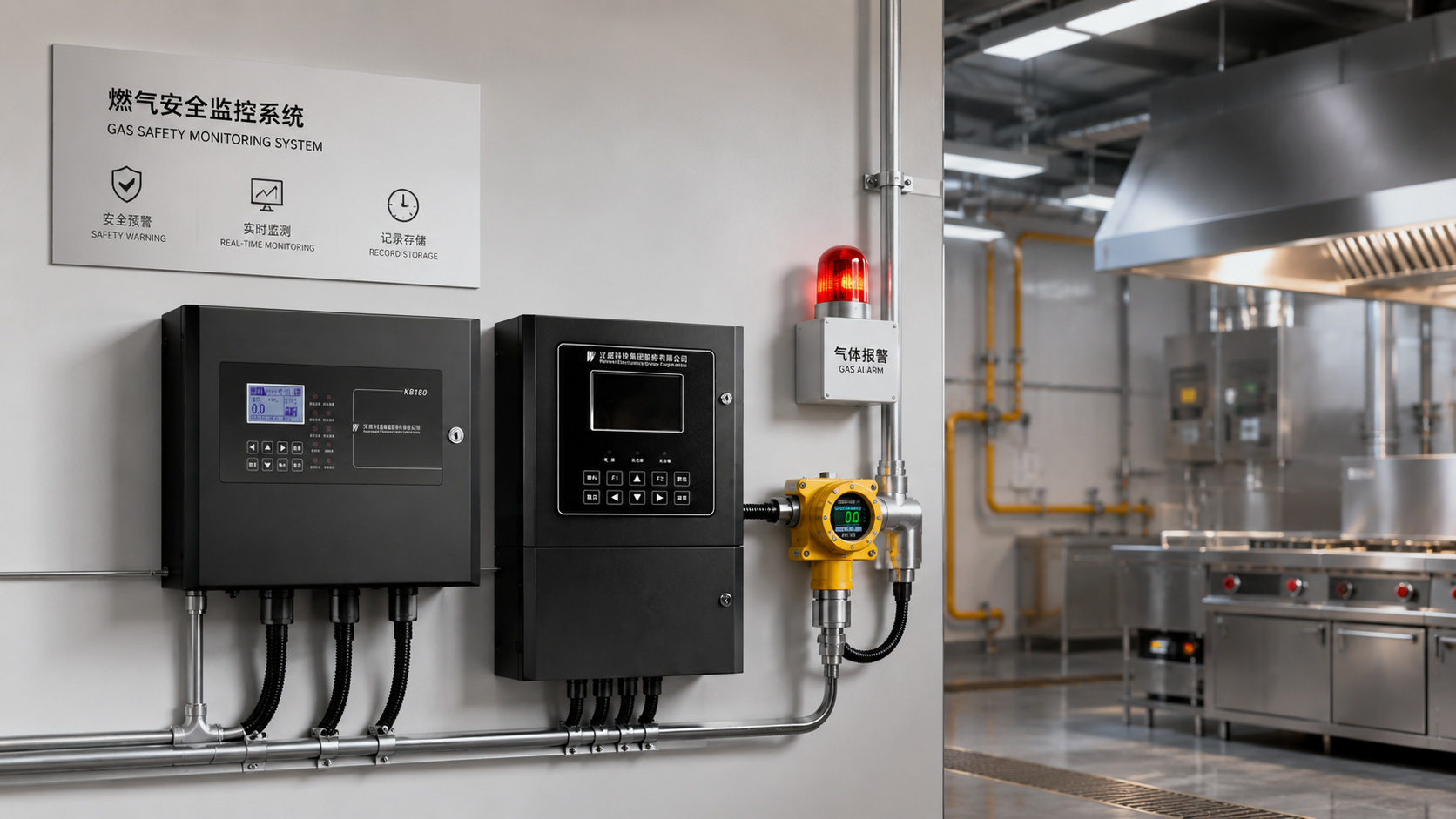
Fixed gas detectors for residential, commercial and industrial applications
Wireless methane monitoring terminals for valve chambers, regulator cabinets and confined spaces
Portable and laser methane detectors for field inspection
Smart gas safety platform for alarms, asset location and work order management
Repair verification and traceable leak response records
Inspection and Delivery ScopeConfirm gas coverage, site suitability, certification and target market requirements for each tool. UAV availability, payload and deployment conditions require separate confirmation before selection. Monitoring indications do not establish safe entry, a leak rate or an automatic control instruction.
Detect, locate, quantify, repair, verify and report methane leak events through a practical gas utility workflow.
Detect suspected gas or methane leak events from fixed devices or field tools.
Record the asset or route location and field findings; a patrol coordinate alone is not a confirmed leak source.
Keep concentration readings separate from leak rate; record a rate only when suitable quantification is available.
Assign follow-up through the operator's process; record the repair, responsible team and completion time.
Record the post-repair method, conditions and result against the event; work-order completion alone is not verification.
Retain linked inspection, repair and verification records for safety and methane management review under the agreed reporting scope.
A useful LDAR program connects safety awareness with field evidence. Choose complementary tools for the access and monitoring task.
Installed detectors and monitoring terminals provide indications at selected customer sites, valve chambers or regulator areas. Link the alarm to the monitored point and available device status, then assign field follow-up. Coverage is specific to the installation, not the whole network.
Vehicle-mounted laser inspection supports suspected leak screening along road-accessible corridors, campuses and industrial parks. Route and indication records help identify where follow-up is needed; field investigation must establish the source before a patrol indication becomes a confirmed leak record.
Electric-bike inspection is an option for narrow streets and residential or commercial routes where vehicle access is inconvenient. Review route suitability, local access and the selected sensing configuration, then keep the indication linked to the follow-up task.
Portable detectors support task-specific field checks. EGC200 ethane identification can assist gas-source review where its confirmed configuration is suitable. Retain the observations and investigation outcome rather than treating methane indication or gas composition alone as conclusive source attribution.
Leak monitoring points should be selected by asset risk, inspection workflow and project scope.
Remote indications can identify a chamber needing review between visits. Confirm the monitoring configuration and connect the event to field findings; a normal remote reading is not clearance to enter the chamber.
Associate indications around joints, valves and equipment with the correct cabinet. Record site findings separately from pressure observations; pressure monitoring alone does not confirm a methane leak.
Fixed detection and local alarm handling address the occupied site, while service records document follow-up. Agree who responds locally and which information is shared with the utility; do not wait for a reporting workflow to replace site safety procedures.
Link an inspection to the room and relevant asset rather than only a customer account. Consumption or flow records may provide context, but they do not replace a suitable gas detection method.
Treat remote monitoring and field access as separate scopes. A methane indication or its absence does not establish all atmospheric conditions; access remains subject to the operator's applicable assessment and safety procedures.
Choose patrol tools according to route access and inspection scope. Keep the route, suspected indication and later field findings linked so a repeated observation can be reviewed in context, without assuming an exact underground source from the patrol location.
Match detector gas coverage and installation to the premises, then define the customer, utility and service team's responsibilities. Include access arrangements and a contact for follow-up, not just a device on a map.
Record the work and its completion time, then attach the post-repair check to the same event. Where maintenance or venting records are relevant, keep them distinguishable from accidental leak observations.
The value is a practical data foundation for safer operation, lower gas loss and future methane management.
Connect the tool, route or asset and field finding so the next team can understand what needs investigation, rather than receiving an isolated alarm.
Keep confirmed leak findings and repair progress available for review. Any estimate of avoided gas loss requires suitable measurement and an agreed method, not simply the number of alarms cleared.
Distinguish an assigned task, completed repair and recorded verification. This helps reviewers see what is resolved and which events still need field work or evidence.
Retain the measurement basis and traceable operational records for subsequent reporting review. This is data support, not a claim of verified emissions reduction or automatic carbon credit eligibility.
Define these evidence handovers before the pilot. They are workflow requirements to agree, not a claim that every platform has preconfigured approval functions.
Retain the original indication, location, tool and field observations. Record whether a source was identified or further investigation is needed; do not silently convert every alert into a confirmed leak.
Keep the repair action and completion time separate from the post-repair check. Record who checked, when, with which method or instrument and under what conditions, together with the result and any follow-up required.
Agree who reviews the evidence and what is needed to close a task. Keep unresolved findings visible. Where emissions reporting is intended, review additional quantification and methodology requirements separately from operational closure.
Structured leak records can support safety operations, gas loss review and methane management discussions when project methods allow.
Around the world, gas utilities are moving methane management from voluntary ESG statements to practical operational programs. Typical actions include leak detection and repair, advanced methane measurement, faster repair of high-emission leaks, gas loss analytics, repair verification and structured reporting.
Key message
PG&E has reported methane emissions reduction efforts in its natural gas pipeline system through shorter leak survey cycles, advanced leak detection technologies and prioritization of higher-emission leaks for faster repair.
Hanwei relevance
This industry direction supports the need for leak detection data that can help track safety response, gas loss review and methane reduction performance indicators.
Reference: PG&E Methane Emissions ReductionsKey message
California requires gas utilities to report natural gas leakage and vented emissions from transmission, distribution and storage systems. Reporting may include leak counts, repair time, emission estimates and mitigation practices.
Hanwei relevance
This shows why structured leak records, repair work orders and post-repair verification data matter for future regulatory or ESG reporting.
Reference: California Public Utilities CommissionKey message
Italgas has used advanced methane measurement and digital asset management to improve emissions data accuracy and support OGMP 2.0-style methane reporting.
Hanwei relevance
This supports the idea that gas utilities are moving from estimated emissions to measurement-based methane data.
Reference: Italgas Methane EmissionsKey message
Snam's methane management and LDAR practices show how leak detection, repair management and emissions quantification can become connected operational workflows.
Hanwei relevance
This industry direction is aligned with Hanwei's Detect → Locate → Repair → Verify → Report workflow.
Reference: Snam Methane EmissionsKey message
Cadent has explored data-driven leakage analytics to identify, locate and prioritize leaks in gas distribution networks, combining models, sensor data and reporting tools.
Hanwei relevance
This supports positioning a smart gas platform as more than an alarm dashboard: it can become a gas leak analytics and methane management data platform.
Reference: Cadent InnovationKey message
Transmission operators such as GRTgaz / NaTran have worked on reducing methane emissions by recovering gas or reducing venting during maintenance and repair activities.
Hanwei relevance
This shows that methane management is not limited to accidental leaks. Maintenance, venting and repair records may also become important data sources.
Reference: NaTran Methane EmissionsKey message
GRDF is promoting renewable and low-carbon gas integration into distribution networks, including biomethane and future low-carbon gases.
Hanwei relevance
As gas networks evolve, gas safety monitoring, leak detection, metering and digital operation systems will remain important for safer and lower-carbon gas infrastructure.
Reference: GRDF Green GasThese cases are global industry references and overseas reference cases. They do not imply a customer relationship, partnership or project delivery by Hanwei.
These global examples show a clear trend: methane reduction is becoming an operational data problem. Gas utilities need to know where leaks occur, how large they are, how quickly they are repaired, whether the repair is verified, and how the information can be used for internal management, ESG disclosure or future methane reporting.
For equipment and platform suppliers, the opportunity is not to claim carbon credits, but to help utilities build reliable, traceable and auditable leak management data.
How this solution supports day-to-day operations and project delivery.
Explore products for leak detection, field inspection and gas safety monitoring.
Explore technical guides related to this solution.
Share the target market, asset types, route access, existing tools and platform, and the teams responsible for inspection, repair and verification. Identify the record fields and intended report use. Begin with a defined route or asset group and review how an indication moves through field investigation to a documented outcome before expanding the scope.
Leak detection data alone does not automatically create carbon credits. Carbon crediting depends on approved methodologies, project boundaries, baseline scenarios, quantification rules and third-party verification. Hanwei provides MRV-ready data support for leak detection, repair verification and methane management.
LDAR stands for Leak Detection and Repair. For gas utilities, it means detecting suspected leaks, locating leak sources, prioritizing repair, verifying post-repair results and keeping structured records for safety and methane management.
No. Gas concentration or alarm status indicates a potential leak risk, but emissions estimation usually requires additional data such as leak rate, leak duration, gas composition, operating status and approved calculation methods.
Record detection time, asset or route location, indication and measurement basis, source findings, instrument status and calibration record, repair work and completion time, and the post-repair check and result. Retain the inspection history and unresolved questions. Add leak rate only when suitable quantification is available; the data fields and interface must be agreed for the project.
Hanwei helps gas utilities turn leak alarms, field inspections, repair work orders and verification results into structured records that can support internal methane control, gas loss reduction and gas utility ESG reporting.
No. A mobile indication identifies a location for investigation, not necessarily the exact source. Field teams need a suitable follow-up method and must record their findings. EGC200 gas-source review can complement investigation where the selected configuration is suitable; it is not a universal or automatic source decision.
Not by itself. Keep the repair completion separate from post-repair verification and record the check, method, time, conditions and result. The operator defines acceptance and any further action. Operational closure also does not automatically establish an emissions reduction claim.
Certification availability varies by product and target market. Contact us for confirmed specifications.
Share your product interest, target market and application scenario so our team can review your inquiry and contact you.