
24/7 pressure visibility for regulating facilities
Support practical gas safety operation with clearer visibility, records and response workflows.
Application Scenario
Home / Applications / Gas Regulator Station Pressure Online Monitoring
Wireless pressure monitoring application for gate stations, regulator stations, regulator cabinets and unattended gas distribution pressure points.
Field Devices
Gas detectors, pressure points, odorization terminals and inspection devices.
Monitoring Map
Map-based visibility for sites, networks, alarms and device status.
Alarm Workflow
Classify alarms, route response tasks and keep event context connected.
Response Record
Keep patrol, verification and response evidence available for review.
Operational Needs
Hanwei frames application pages around the operating conditions, risk points and response workflows that matter to each customer type.
Support practical gas safety operation with clearer visibility, records and response workflows.
Support practical gas safety operation with clearer visibility, records and response workflows.
Support practical gas safety operation with clearer visibility, records and response workflows.
Support practical gas safety operation with clearer visibility, records and response workflows.
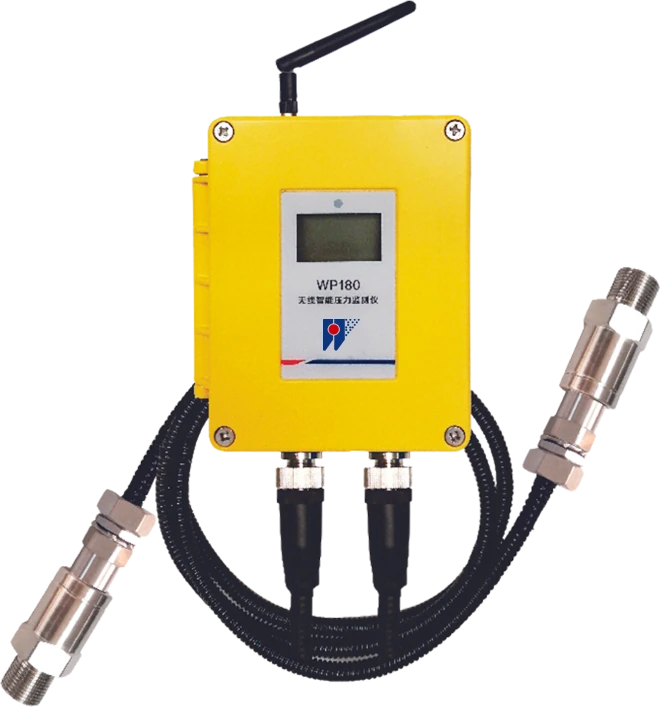
Confirm each WP180 configuration and interface. A pressure reading does not identify the location of a gas leak. Use WM300 only with a confirmed sensor package; use the dual-parameter path for shared cabinet and well review.
Application Details
Explore the operating conditions, monitoring tasks and response needs for each scenario, with product selection boundaries to review before deployment.
Scenario 1
Where it is usedGas gate stations and city gas pressure operation points where operators need pressure trend visibility.
Customer problemMechanical gauges and periodic inspection may not provide continuous pressure records or timely abnormal-pressure awareness.
Hanwei Smart Gas approachUse WP180 Wireless Gas Pressure Monitor discussion with 4G / NB-IoT reporting, pressure trend records and alarm workflow connection.
Customer valueSupport clearer pressure visibility, remote alarm review and operation records for dispatch decision-making.
Safety boundaryPressure range, channel configuration, reporting cycle and platform integration must be confirmed by product model and project scope.
Scenario 2
Where it is usedCommunity, industrial park or facility regulator stations with distributed operating points.
Customer problemRegulating facilities are often widely distributed, making manual inspection costly and pressure abnormality discovery delayed.
Hanwei Smart Gas approachReview WP180 pressure monitoring against the required reporting interval, alarm workflow and receiving system. Confirm interfaces and notification responsibilities for the project.
Customer valueHelp reduce purely passive pressure operation review and create traceable records for maintenance follow-up.
Safety boundaryRemote pressure monitoring complements inspection teams. Field confirmation and maintenance response remain necessary.
Scenario 3
Where it is usedOutdoor pressure regulating cabinets, regulating boxes and selected district pressure points.
Customer problemSome locations may have limited cabling conditions, weak power access or no continuous pressure data collection.
Hanwei Smart Gas approachReview wall-mounted WP180 installation near the regulating facility, pressure tapping condition, power plan and wireless communication environment.
Customer valueSupport lower-deployment-friction pressure data collection for smart gas network upgrade pilots.
Safety boundaryWP180 should not be shown as a buried valve-well device or direct inline gas main device.
Scenario 4
Where it is usedSelected unmanned regulator stations or district pressure monitoring pilots.
Customer problemOperators may lack real-time pressure trend data and automatic pressure-limit alarms at unattended pressure points.
Hanwei Smart Gas approachUse periodic upload and event-triggered alarm workflow discussion by confirmed product configuration and communication coverage.
Customer valueSupport pressure trend review, alarm handling and response records without assuming unverified response-time guarantees.
Safety boundaryNetwork availability, battery life and alarm timeliness depend on site conditions and reporting-cycle configuration.
Recommended Solution Path
These solution paths show how Hanwei packages monitoring points, devices and platform records around the application scenario.
 Pipeline
Monitor inlet or outlet pressure at a regulator station or cabinet. Define the tapping points, pressure range and reporting interval before selecting a wireless monitor such as WP180.
View SolutionPipelineStart with the location and the decision your operator needs to make. A regulator station may need pressure trends, a valve chamber may need methane alarms, and a patrol crew may need to investigate a suspected leak along the route.
View SolutionPlatformGas IoT, alarm monitoring and operation platform structure for connected gas safety workflows.
View SolutionHow It Works
Hanwei is positioned as a gas safety operation partner, connecting devices, maps, alarms and records instead of presenting isolated equipment only.
Step 1
Gas detectors, pressure points, odorization terminals and inspection devices.
Step 2
Map-based visibility for sites, networks, alarms and device status.
Step 3
Classify alarms, route response tasks and keep event context connected.
Step 4
Keep patrol, verification and response evidence available for review.
Step 5
Support local delivery through pilot planning and technical discussion.
Next Step
Share your target sites, operating role and priority risks. Hanwei can help structure a focused application discussion, solution path or pilot proposal.
Application-led solution planning
Field devices, monitoring map, alarm workflow and partner support.