HanweiSmart Gas

Search Hanwei Smart Gas

Products, solutions and technical guides

Hanwei Smart Gas

Home / Underground Gas Manhole Safety Monitoring Solution

Underground Gas Manhole Safety Monitoring Solution

Connect valve chamber gas indications and device status with remote review, field follow-up and maintenance records, using WG160II monitoring options matched to the site.

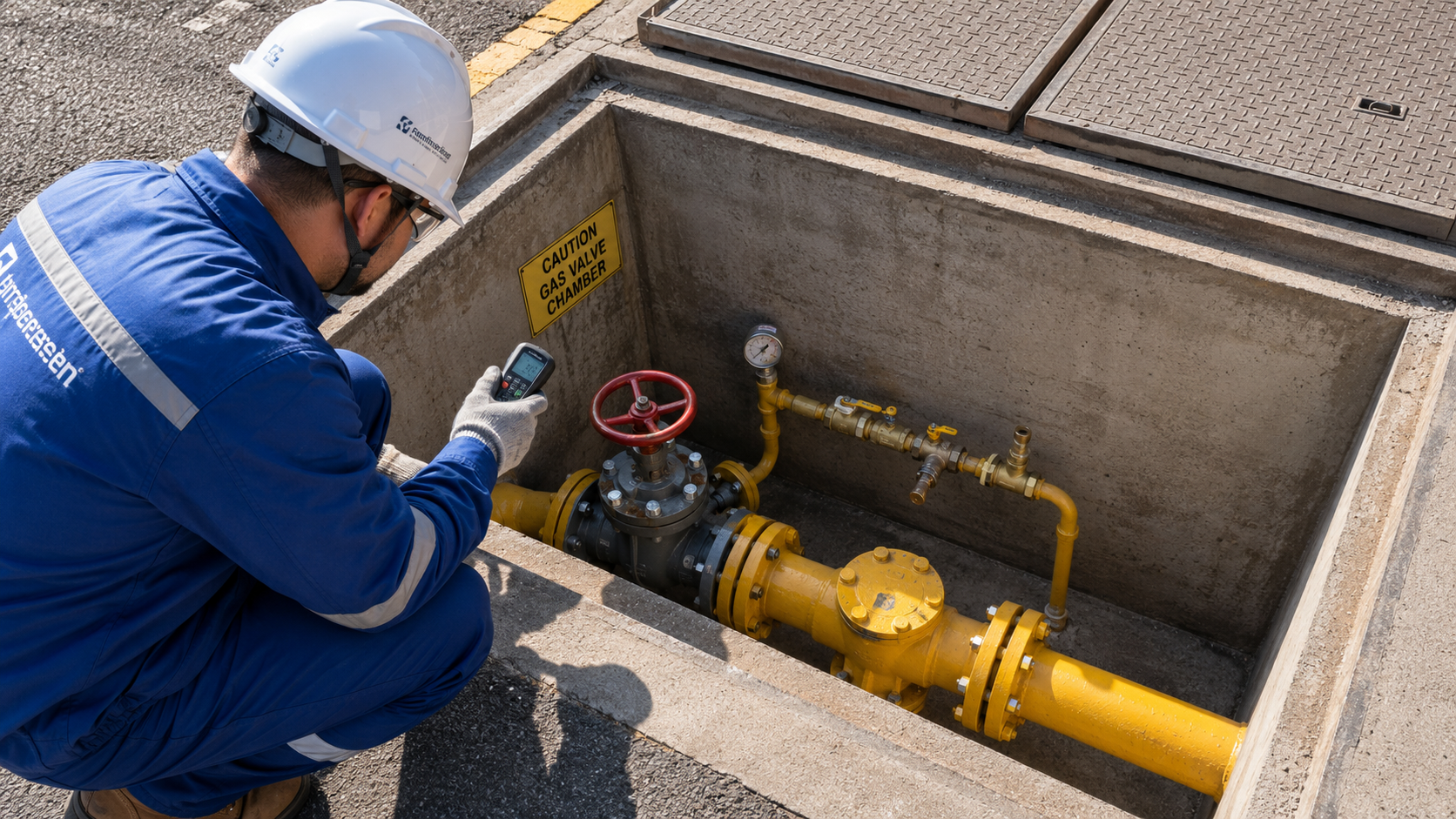
Underground Gas Manhole Safety Monitoring Solution business scene visual

Answer Summary

Hanwei Smart Gas supports gas utilities, distribution operators and engineering partners with remote monitoring workflows for valve chambers, valve wells and selected underground utility spaces. WG160II environmental monitoring can be combined with wireless reporting, asset locations, alarm review and maintenance records. Methane, temperature and water intrusion monitoring depend on the confirmed device configuration. The purpose is to give teams point-specific context between inspections and connect an event to field follow-up, not to replace site assessment or establish safe entry. Gas coverage, communication, power, environmental suitability and certification require product model and target market confirmation.

Match Monitoring to the Chamber

A remote alarm is useful when the operator can identify the chamber, understand the reported condition and arrange field follow-up. Choose the monitoring observations and the response process together.

  1. 01

    Chamber environment

    WG160II monitors surrounding conditions, not gas inside the main.

  2. 02

    Wireless reporting

    A selected communication option carries available readings and device status.

  3. 03

    Asset & alarm review

    Associate the event with chamber identity, location and reporting time.

  4. 04

    Field follow-up

    Record findings, maintenance and the reviewed outcome against the asset.

Functional sequence, not an installation drawing. Remote readings do not establish safe entry into a confined space. Communication coverage and reporting intervals require site confirmation.

Events between inspection visits

A utility needs visibility at selected valve chambers between scheduled visits.

Configuration to review

WG160II with confirmed methane, temperature and water intrusion monitoring options.

Practical value

Adds point-specific observations to inspection records, rather than relying only on the last visit.

Check before selection

Included sensors, mounting, water exposure, power, signal coverage and service access.

A wider parameter scope

The project also needs to assess pressure or other network-condition observations.

Configuration to review

Review WG360II as an alternative configuration, not a mandatory second device.

Practical value

Matches the monitor to the required observations instead of assuming one version measures everything.

Check before selection

Sensor channels, pressure connection where relevant, installation and version-specific functions.

District-level follow-up

Operations and maintenance teams share responsibility for multiple points.

Configuration to review

Connect agreed device records to an asset map and alarm-response workflow.

Practical value

Keeps the event, responsible team and field outcome associated with the same chamber.

Check before selection

Existing asset IDs, supported integration, reporting gaps, response ownership and record fields.

Plan the Local Delivery Scope

Share the specific country, chamber types, environmental conditions, mobile-network coverage and existing asset platform. Agree installation, access, maintenance, calibration and spare-parts responsibilities before extending a pilot. Overseas suitability and certification need model and market review.

Customer Challenges

A chamber inspection describes conditions at the time of the visit; operating teams also need a way to review events reported between visits. An alert without a reliable asset identity or device status can be difficult to investigate. Underground communication, water exposure and maintenance access differ by point, so a repeatable installation package cannot be assumed before site review.

Hanwei Solution

Hanwei connects the selected WG160II monitoring configuration with wireless communication, a mapped asset record and an agreed alarm-response workflow. Operators review the event alongside device status, assign appropriate field follow-up and retain findings and maintenance outcomes. Methane indication, temperature and water intrusion are different observations, not interchangeable evidence of a pipeline leak. The scope connects remote visibility with existing inspection work rather than presenting a map or alarm as a completed response.

Deployment Scenario

The solution is organized around operating scenarios first, then product selection and platform workflow.

Application Scenarios

Gas valve chambers and valve wells
Underground pipe galleries and utility tunnels
Regulator station or regulator cabinet surrounding environments
District-level remote gas alarm pilot projects
City gas network inspection and maintenance support

System Components

Combine the field monitor, communication arrangement and response records for the selected underground points. WG360II is an alternative to review where a different parameter scope is needed, not an additional device required in every chamber.

WG160II Valve Chamber Gas Detector

Valve well monitoring device

Wireless communication and BLE local configuration discussion

Smart Gas Safety Monitoring Platform

Maintenance response and verification record workflow

Underground Monitoring ScopeConfirm gas and environmental monitoring options, signal conditions, power plan, installation suitability and certification by product model and target market. Remote readings do not establish safe entry into a confined space or replace the site's access procedures.

Underground Monitoring by Site Condition

For utility operations and maintenance teams, each point needs a clear identity, a suitable monitoring configuration and a practical route to follow-up.

Valve chambers and valve wells

Associate environmental gas indications with a specific chamber and its equipment record. This helps the team identify where follow-up is needed; the device monitors the surrounding environment rather than measuring gas flow or pipeline process conditions.

Points exposed to water intrusion

Where water intrusion monitoring is included, review that observation alongside gas indication and device status. It can inform maintenance follow-up, but neither a water alarm nor a normal water indication establishes the condition of the gas pipeline.

Enclosed utility spaces

Review communication, available space, power and maintenance access for the actual location. An underground installation should not be treated as identical to an above-ground point, and a reporting option does not guarantee signal availability at every chamber.

District monitoring programs

Use consistent asset identifiers and record fields across selected points so operators can review events and maintenance outcomes together. Confirm responsibility for follow-up before expanding the number of devices; a larger map alone is not a response process.

Connect Remote Monitoring with Field Work

The design focus is a traceable route from the monitored point to a reviewed outcome, with device and communication conditions kept visible.

Select the observations needed

Confirm the WG160II gas and environmental monitoring configuration for each point. Methane, temperature and water intrusion options should be specified explicitly. Pressure or other additional parameters require separate model and interface review rather than being assumed from the solution name.

Review the event in context

Link the reported indication to asset location, event time and available device status. Keep missing or unavailable readings distinct from normal readings. Platform handling, reporting intervals and notification functions are part of the configuration review, not universal commitments.

Retain follow-up and verification

Connect the assigned task, field findings, any maintenance action and the recorded outcome with the original event. This supports later review of what happened and what was done, while site teams continue to follow their approved inspection and access procedures.

System Architecture

Key stages in this solution, from the starting point to the operational outcome.

  1. Field monitor

  2. Wireless communication

  3. Monitoring map

  4. Alarm workflow

  5. Maintenance response

  6. Record archive

Operational Value

How this solution supports day-to-day operations and project delivery.

Point-specific visibility: associate indications and available device status with a known valve chamber rather than an unidentified remote alarm.
Monitoring and inspection continuity: keep reported events and field findings connected so scheduled visits are not the only records available for review.
Clear parameter roles: distinguish gas indication, water intrusion and temperature observations, with each included only where the configuration supports it.
Traceable maintenance follow-up: link the event, assigned task and recorded outcome to the same asset so district teams can review outstanding and completed work.

Scope a Valve Chamber Monitoring Pilot

Share the target country, point locations and types, intended monitoring parameters, water exposure, power and communication conditions, and maintenance access arrangements. Include any existing asset map or platform, who will review alarms and how field outcomes should be recorded. Start with representative points to review installation and workflow suitability before extending the scope.

FAQ

What does underground gas manhole monitoring cover?

It connects environmental monitoring at selected underground points with remote review and maintenance follow-up. Methane, temperature and water intrusion monitoring are configuration-dependent; confirm which observations are included rather than treating all functions as standard.

Is WG160II connected directly to the gas pipeline?

No. It is positioned as an environmental monitoring device for enclosed spaces. It should not be described as a gas meter or direct inline pipeline instrument.

How should communication and power be confirmed?

Communication method, signal condition, battery plan and maintenance access should be confirmed by site environment, product model and target market.

Does a normal remote reading mean a chamber is safe to enter?

No. A remote reading is not a confined-space entry clearance and does not establish all conditions at the site. Personnel must follow the operator's applicable access and safety procedures; this monitoring workflow is not a substitute for them.

Does a methane indication locate a pipe leak or quantify emissions?

No. An environmental indication at a chamber identifies an observation for investigation. It does not by itself establish the exact leak source, leak rate or methane emissions. Field findings and any further measurements should remain linked to the event record.

Are certifications available?

Certification availability varies by product and target market. Contact us for confirmed specifications.

Contact / Inquiry Form

Share your product interest, target market and application scenario so our team can review your inquiry and contact you.

You can also contact [email protected]. For technical drawings or equipment photos, ask our team about a suitable transfer method. Share only material you are authorized to disclose and include your inquiry reference when available.